
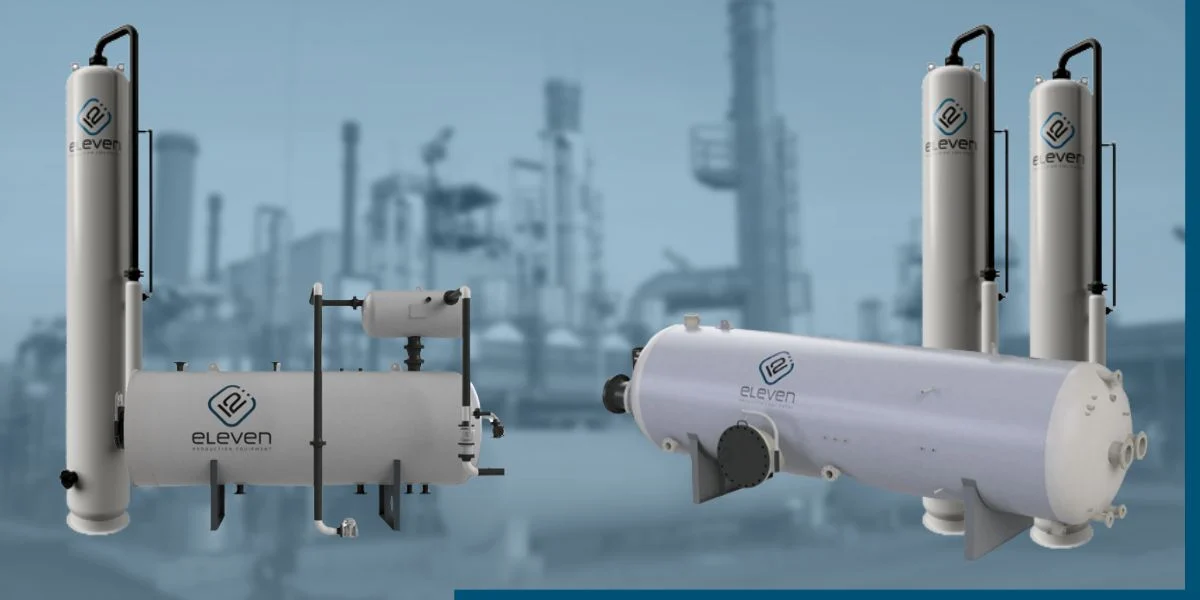
Once hydrocarbons reach the surface, a series of engineered systems and equipment begins the critical job of separating, treating, and preparing oil, gas, and water for further processing or export. These surface production facilities are the beating heart of upstream operations—and understanding the key equipment involved is essential for engineers, operators, and technicians.
This blog breaks down the most important equipment used in surface production facilities, their function, and why they matter.
1. Wellhead Equipment
The journey of produced fluids begins at the wellhead, a system designed to:
- Control pressure
- Regulate flow
- Provide safe access to the wellbore
- Protect equipment from extreme conditions
Key components include:
- Casing head & tubing head
- Christmas tree valves
- Choke valves
- Safety valves
Wellhead equipment ensures safe delivery of multiphase fluids into flowlines without losing pressure or compromising safety.
2. Flowlines and Gathering Systems
Once fluids leave the wellhead, they travel through flowlines—pipelines that carry the production stream to separation facilities.
Flowlines are designed to handle:
- High-pressure multiphase flow
- Potential formation of wax, hydrates, and scale
- Corrosion from water and contaminants
These lines may include pig launchers, insulation, or heating systems to maintain flow assurance.
3. Separation Equipment
The separator is one of the most critical components of a surface production facility. Its purpose is to divide the multiphase mixture into:
- Oil
- Gas
- Water
Common separator types include:
- Two-phase separators (oil-gas)
- Three-phase separators (oil-gas-water)
- Horizontal separators
- Vertical separators
- Slug catchers
Separators rely on gravity, internal plates, weirs, and sometimes heat or chemicals to efficiently break down the mixture.
4. Heater Treaters and Oil Stabilization Equipment
Crude oil often contains water and impurities that must be removed to meet pipeline or export standards.
Key equipment includes:
Heater Treaters
Used to heat the emulsion and break oil-water bonds, helping water to separate from crude.
Electrostatic Desalters & Coalescers
Use electric fields to pull small water droplets together, improving oil quality.
Stabilizers
Remove volatile components from crude oil to reduce vapor pressure and enhance safety during storage and transport.
5. Pumps
Pumps are vital for moving fluids between units, boosting pressure, and transferring processed oil and water.
Common pump types in surface facilities:
- Centrifugal pumps
- Positive displacement pumps
- Reciprocating pumps
- Screw pumps
They support fluid transport, chemical injection, water handling, and export operations.
6. Compressors
Compressors are used to increase the pressure of produced gas for:
- Transportation
- Reinjection
- Processing
- Gas lift systems
Types of compressors used:
- Reciprocating compressors
- Centrifugal compressors
- Rotary screw compressors
Compressors also play a major role in vapor recovery units (VRUs), flare systems, and gas dehydration processes.
7. Gas Dehydration & Sweetening Units
Produced gas contains water vapor, CO₂, H₂S, and other impurities that must be removed to prevent corrosion, hydrate formation, and pipeline issues.
Key equipment:
- Glycol dehydration units
- Molecular sieve systems
- Amine sweetening units
- Sulfur recovery systems
These ensure gas meets sales, reinjection, or processing requirements.
8. Produced Water Treatment Equipment
Produced water can be the largest by-product of oil & gas production and must be treated before disposal or reinjection.
Common equipment includes:
- API separators
- Hydrocyclones
- Induced gas flotation units (IGF/DAF)
- Media filters
- Water polishing units
These systems remove oil droplets, solids, and contaminants to meet environmental standards.
9. Storage Tanks
Surface facilities often include tanks for:
- Crude oil storage
- Produced water storage
- Chemical storage
- Buffer capacity during process upsets
Tanks may be:
- Fixed roof tanks
- Floating roof tanks
- Pressurized vessels
They help manage logistics, ensure operational flexibility, and provide a safety buffer.
10. Metering and Measurement Systems
Accurate measurement is essential for production allocation, sales, and performance analysis.
Key metering equipment:
- Coriolis meters
- Turbine meters
- Orifice plates
- Ultrasonic flow meters
- Gas chromatographs
Metering skid packages often include flow computers and calibration systems.
11. Flare Systems
In emergencies or process upsets, flares safely burn off excess hydrocarbons.
Flare systems include:
- Flare stack
- Knockout drum
- Pilot and ignition system
They are essential for protecting equipment and maintaining safety during abnormal conditions.
12. Utility Systems
Utilities support all main production equipment. Major utilities include:
- Fuel gas systems
- Cooling water systems
- Compressed air systems
- Steam boilers
- Electrical power generation
Without utilities, surface facilities cannot operate reliably.
Conclusion
Surface production facilities rely on a wide range of specialized equipment to ensure safe, efficient, and compliant oil & gas operations. From wellheads and separators to compressors and flare systems, each piece plays a critical role in managing the complex behavior of multiphase fluids.
For engineers, operators, and technicians, understanding this equipment is the foundation of designing, managing, and optimizing surface operations.


